Spinning - March 2026
Spinning.
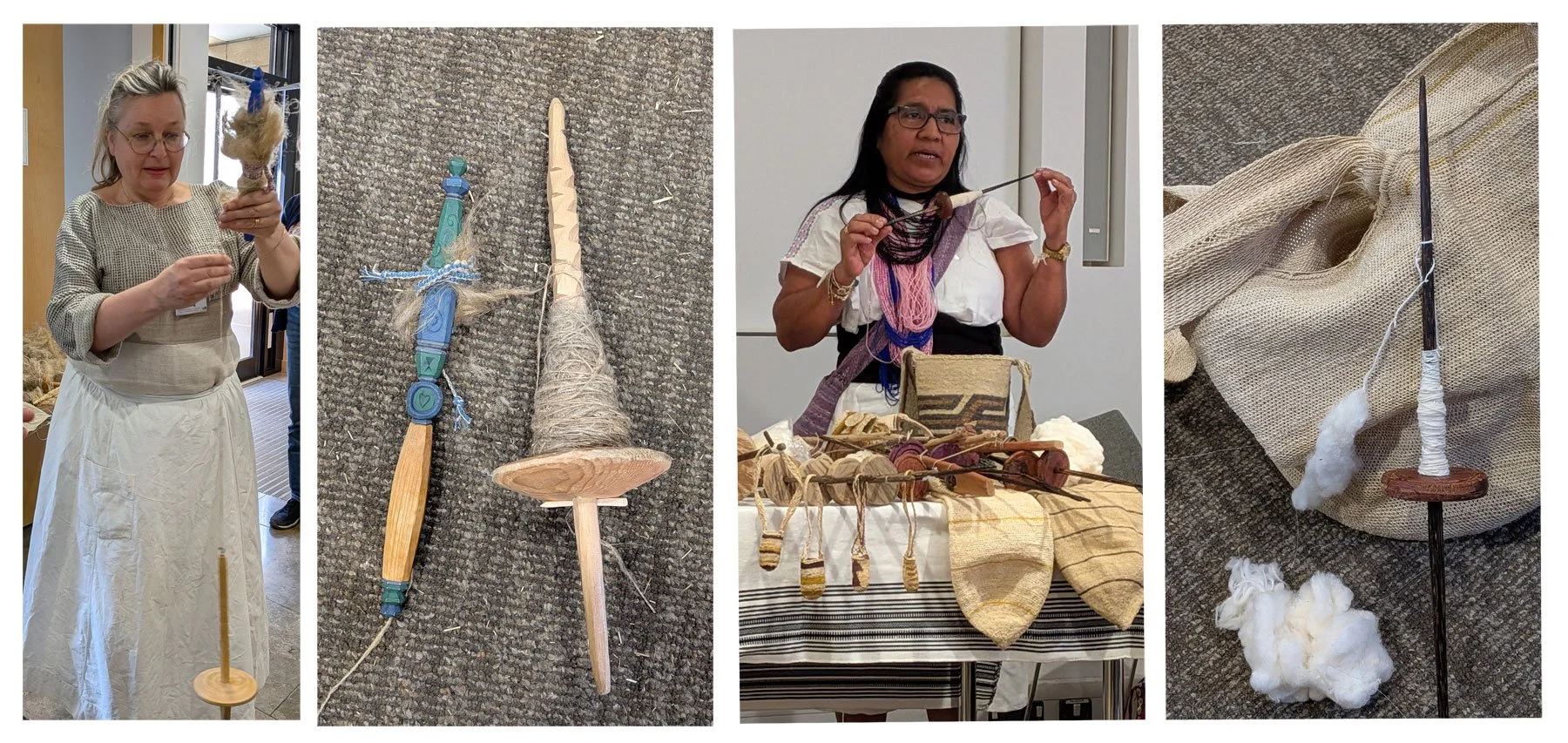
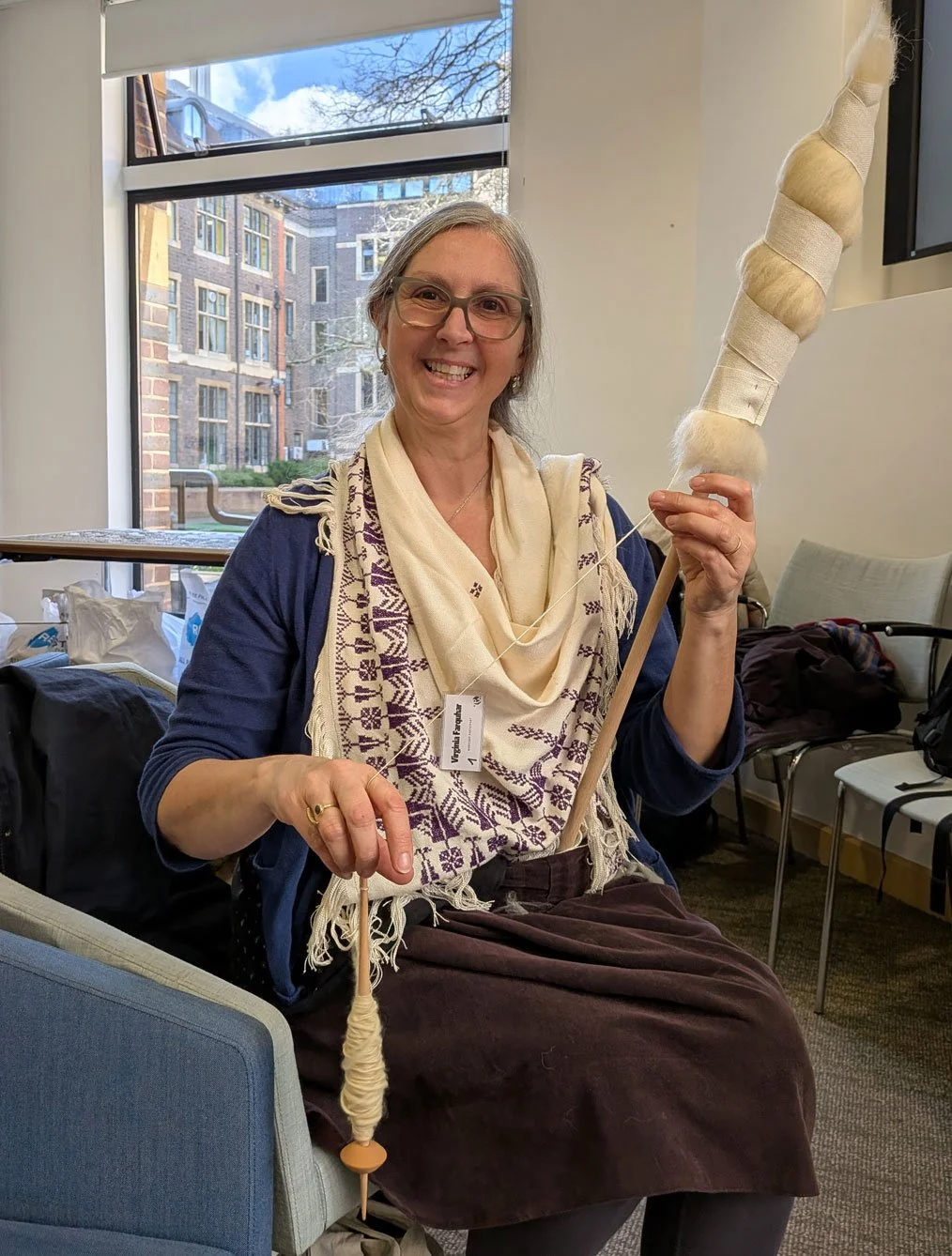
I love to spin and in March, I was thrilled to attended a two day event at Cambridge university organised by the Reverse Action Archaeology research team. I had happened upon this event by chance and was pulled to go. It was truly amazing to be part of the practical research of examining and comparing fibres and early spinning from Columbia and European traditions.
Day 1 examined European spinning techniques. Medieval short suspended wool distaff spinning with Katrin Kania, which was rather tricky. Flax distaff spinning with Johanne Hoegh using line fibre, and Swedish flax tow spinning with Marie Ekstedt Bjersing. Some of these techniques and fibres I had worked with before, but each practitioner has different ways of doing things, and I learned so much. I was in a group with spinners from the local guilds plus the two visiting Colombian textile artists who were to lead day 2 introducing cotton and fique fibres.
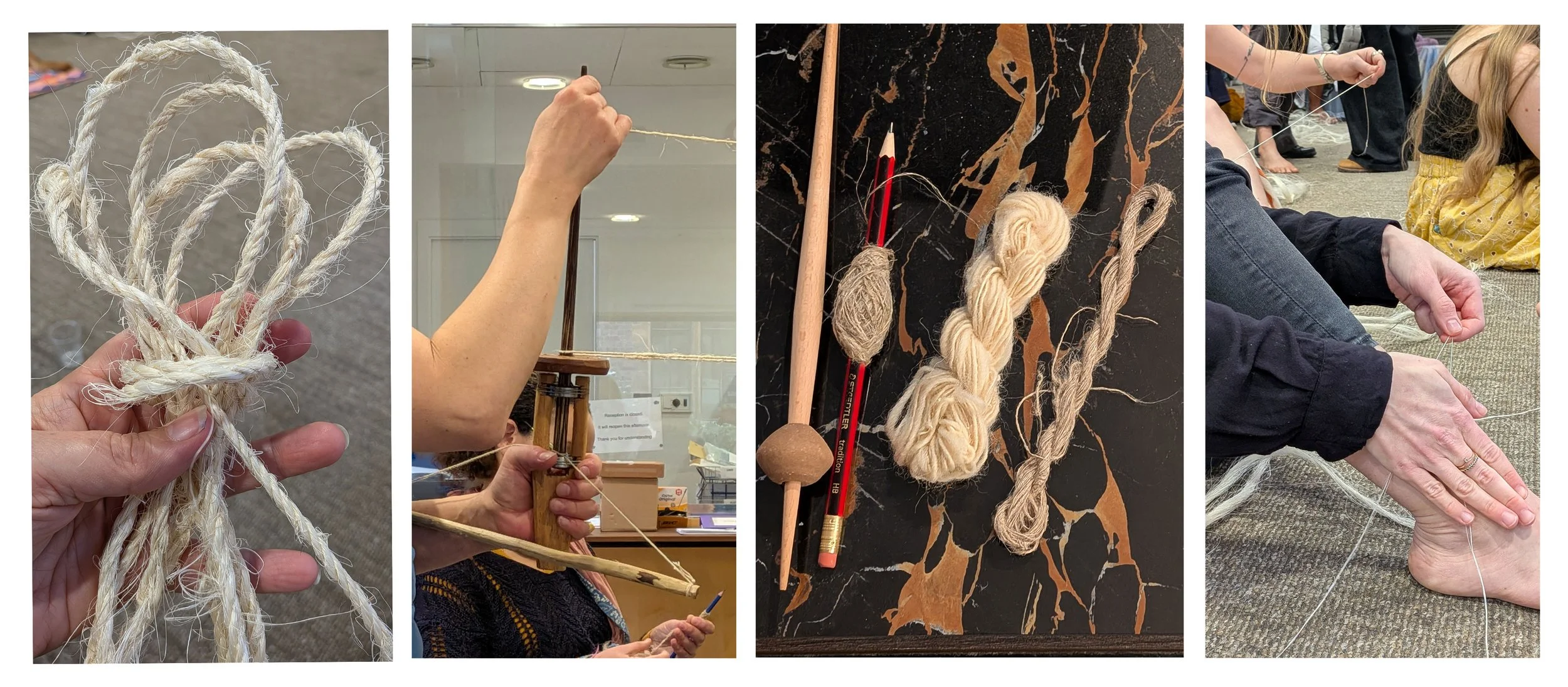
After we had de-seeded the fluffy Colombian cotton bolls, a process called ‘ginning’, we were taught how to prepare the fibres into cobweb-like layers. Then Kogi textile artist Carmen Nuvita Coronado, showed us how to spin using large supported spindles. I had always wanted to try a supported spindle and welcomed this opportunity.
Judith Marina Torres Solis, then showed us how to prepare fique fibres which come from the agave plant. The stiff pure white fibres are joined by splicing and rolled along the thigh to add twist. Trousers were rolled up and many of us sat on the floor and got totally stuck in. We were also showed how thick rope was plied using an adapted spindle. These ropes are used as harnesses for heavier weights and for tending to the animals. The fique fibre is also woven with a looping technique similar to early European nallbinding, to make circular bags called mochilas, a traditional shoulder bag. The women told us that in their creation story that the great earth mother spun the world into being and that women continue to spin and weave to keep the world spinning. Spining and weaving in the Arhuaco and Kogi Colombian traditions are still a way of life, and it made me realise that so much of our European heritage textile skills has skipped the last few generations. Luckily I am seeing a return to more simple, considered textile practice using local materials and this is most encouraging.